Several institutions, several schedules
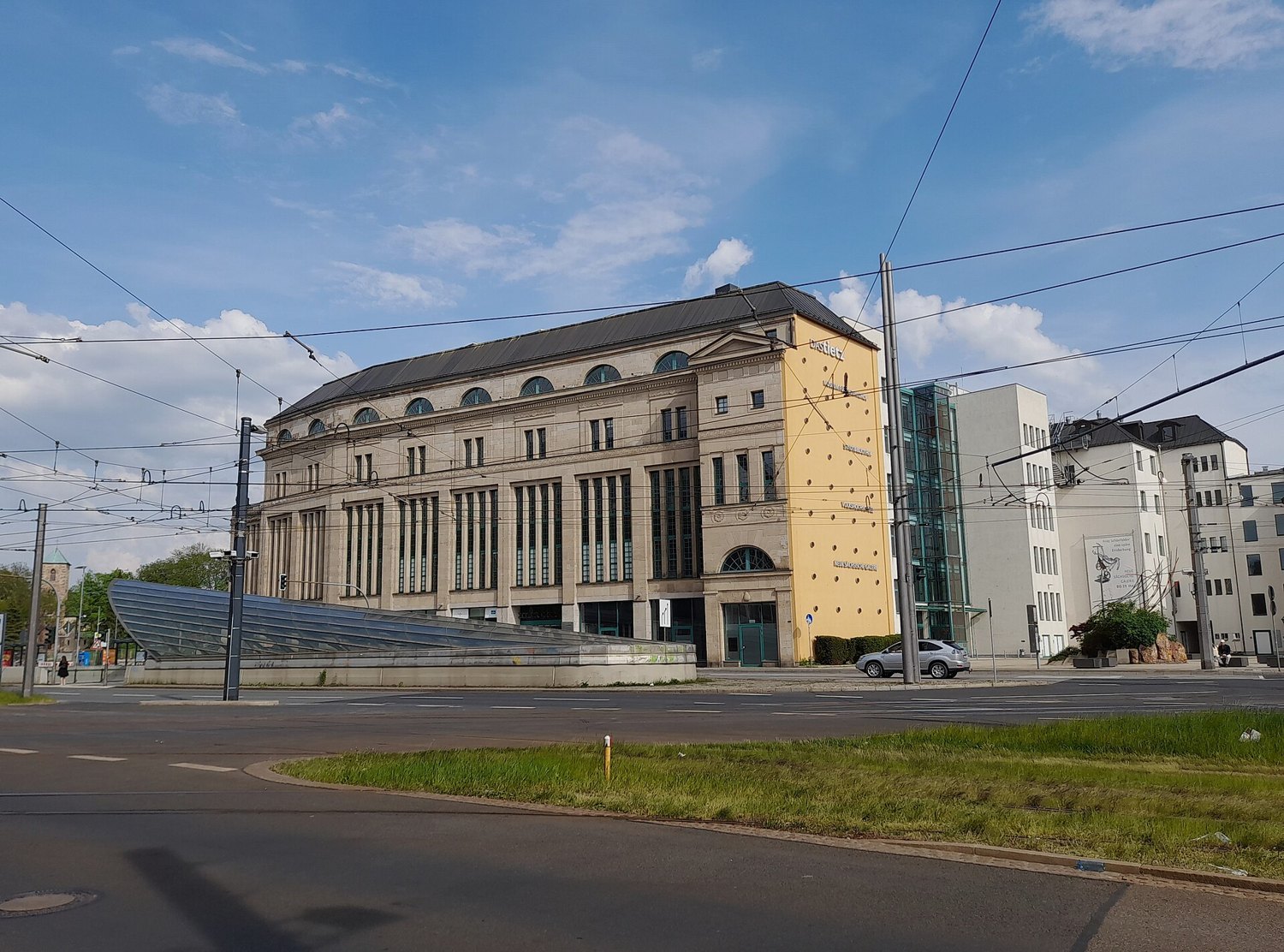
TIETZ at Moritzstraße 20 houses institutions including the city library, adult education centre, Museum für Naturkunde and Neue Sächsische Galerie. The building opened as a department store in 1913. A visit today therefore does not lead automatically to one exhibition or a single programme. Writing TIETZ into your itinerary is only the beginning of the decision.
First decide whether you want art, natural history, a library service or a scheduled event. Then check the opening arrangements of that particular institution. An open building does not mean every department is open. Equally, an event may take place outside usual museum hours. Consult the relevant institution and its current calendar for the answer.
Look for the former department store
Before continuing to your destination, notice the organisation of the space. A department store had to guide people through a large building and make different departments understandable. Consider how entrances, floors and central areas work together today. Which routes are immediately obvious, and where do signs help? This connects the earlier use with the present one without requiring an architectural tour.
An open door does not necessarily identify a public visitor area. Teaching rooms, working spaces and exhibition entrances have their own arrangements. An event requires the room specified in its listing; an exhibition may require a separate ticket. Being able to enter the building establishes nothing about admission to every activity inside.
Put the Petrified Forest in context
The Petrified Forest in the central area provides a striking connection with Chemnitz’s natural history. It can prompt questions about the plants and their geological setting. The visible trunks should not, however, be treated as a substitute for the entire natural history museum. Plan a separate museum visit if you want to investigate their story more closely.
With children, begin with an observation: what still looks like a tree although the material now resembles stone? Read the explanation afterwards rather than leaving the first impression unexamined. Appearance, formation and age are separate questions. A short shared investigation can be more useful than attempting to absorb everything in the building during one visit.
Combine selectively
For half a day, choose one main destination and a smaller addition. A look at the library may follow an exhibition if its opening arrangements and visitor conditions suit you. An art gallery demands a different kind of attention from a natural history display. Make the change deliberately rather than assuming proximity alone makes every combination worthwhile.
If you are attending a tour, course or event, secure that fixed appointment first. Check registration, room and language where relevant to the activity. Independent exploration can occupy the time before or afterwards. TIETZ then becomes understandable as a working cultural building: people arrive for different reasons, stay for different lengths of time and do not need to follow an identical circuit through the house.