A railway site rather than a single gallery
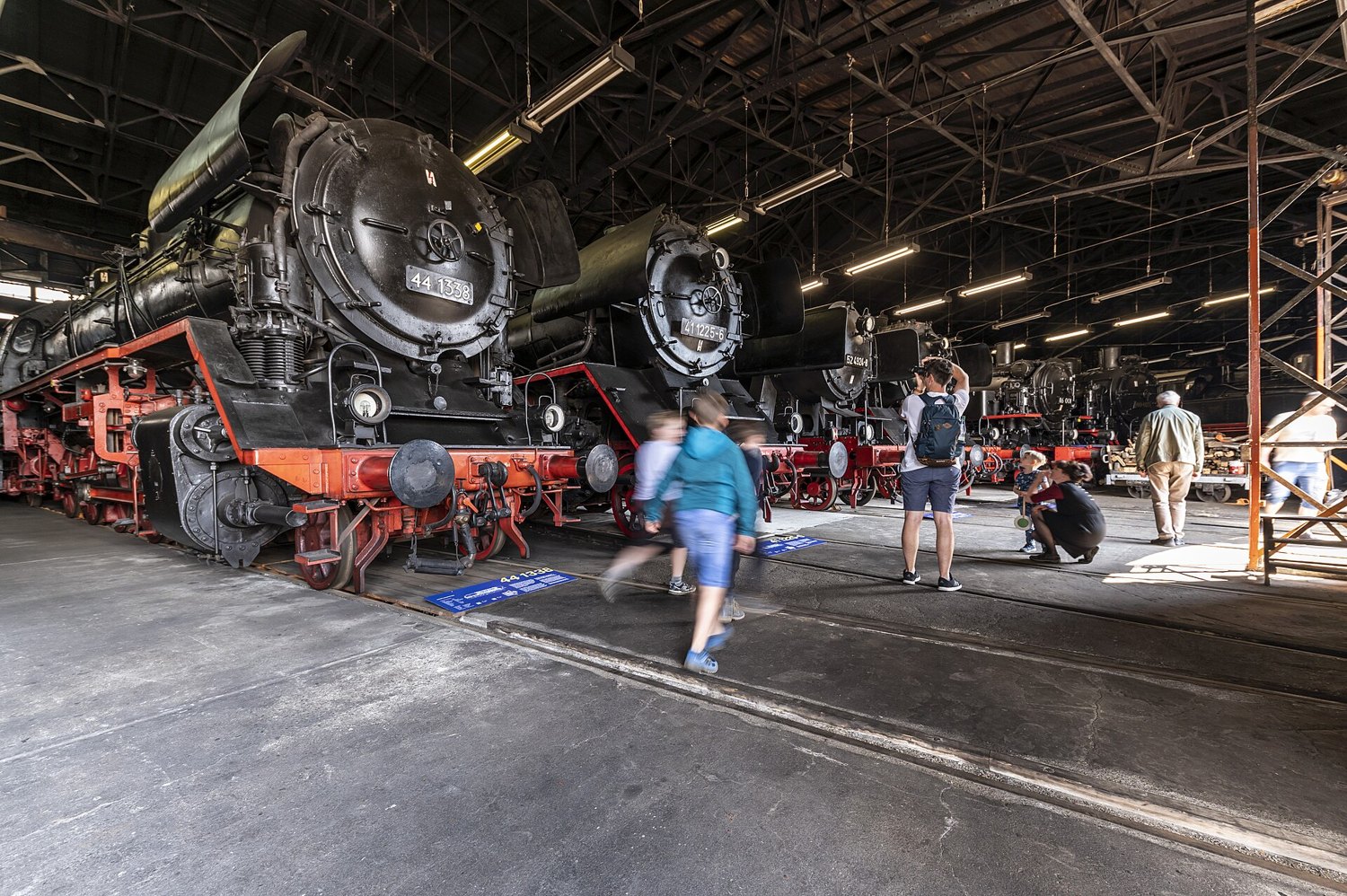
Schauplatz Eisenbahn in Hilbersdorf is not a compact exhibition beside the main station. It brings together a former locomotive depot and marshalling facilities across a substantial historic site. Engines are one part of the visit; equally important is the question of how vehicles were moved, serviced and prepared for their next duty. Expecting only a photograph beside a steam locomotive misses much of the place.
Begin with the operator’s current visitor information and entrance instructions. The visitor centre is listed in the goods shed at Frankenberger Straße 172. Older references to individual parts of the museum may identify other access points. Save the current entrance in your map rather than simply searching for Hilbersdorf. Arriving on the wrong side of a large railway site is not always solved by a short walk along a fence.
Include the connecting walk
The operator describes a distance of roughly one kilometre between the cable-operated marshalling area and the eastern locomotive-shed area. This calls for different planning from a museum with adjoining rooms. Allow for connections, breaks and the return to the exit as well as time beside exhibits. Check which visitor routes are currently open when you arrive.
Rainwear can be necessary even when some attractions are indoors. On sunny days, exposed areas may feel more demanding than the weather forecast suggests. With young children, schedule a break before attention runs out. Visitors with limited mobility need specific information about surfaces, routes, toilets and any transport available on the site; the general word museum does not answer those questions.
Understand marshalling first
A marshalling yard has a different purpose from a passenger platform: wagons must be sorted into new formations. The cable-operated system brings this less visible part of railway work into focus. First try to understand the direction of movement. Where did wagons arrive, where were they separated, and how did they reach another track? An overview or an explanation on site is more useful than looking at individual cables and pulleys without context.
Visible infrastructure is not an invitation to climb or explore freely. Historic rails, steps and machinery remain technical objects. Stay on designated visitor routes and board vehicles only where access is expressly permitted. A strong photograph does not require standing on a track. A view from the side often explains the relationship between a vehicle and its surroundings more clearly anyway.
Compare locomotives through one question
Different forms of power provide a useful starting point. Instead of asking only which engine was strongest, ask where its energy came from, what had to happen before a journey, and what work followed its return. Steam, diesel and electric locomotives then tell different stories about supplies and operation. Read the information beside the particular vehicle rather than inferring its function from its size.
The working surroundings deserve attention too. A locomotive in service depends on people, materials and repeated maintenance. Look for explanations connecting a vehicle to the place where work happened. Visitors with little interest in model numbers can approach the collection through jobs and processes. Enthusiasts can investigate particular classes or technical differences without requiring everyone in their group to follow the same detailed sequence.
Check demonstrations separately
A scheduled ride or demonstration may shape the whole day, but it is not automatically offered whenever the museum opens. Consult the event calendar, check whether an additional ticket is required and identify the meeting point. Place that fixed appointment first and arrange independently accessible areas around it. Do not arrive at the main entrance at the advertised starting time if the activity begins elsewhere on the site.
Without a demonstration, the relationship between tracks, buildings and vehicles remains the centre of the visit. Before leaving, try describing one operating process in your own words. Where was a wagon sorted, where was an engine serviced, and what needed to happen before departure? Connecting those stages turns Hilbersdorf into more than a collection of large machines. It also helps children assemble separate impressions into a story they can understand and remember.