Start with what is on show
Neue Sächsische Galerie, inside TIETZ, focuses on Saxon art after 1945. Its collection spans forms including painting, prints, photography, sculpture and design. That breadth gives the institution its context; it is not a promise that every area can be seen in one afternoon. What matters for a visit is the particular exhibition currently on display.
Read a short introduction before going. A name, a material or a question is enough to give you a starting point. You do not need to study every artist's biography to enjoy the rooms. It can be more productive to bring a question of your own: how is a city represented, what does a printing technique change, or where do ordinary objects meet artistic invention?
Give looking more time than reading
Let the first moment belong to the work. Notice its size, surface and relationship to neighbouring pieces before reading the label. The title may then suggest a direction or change your first impression. There is no single answer you have to discover. The purpose is to become more attentive to decisions that are visible in front of you.
With a print, for example, compare the line, areas of colour and untouched paper. A large work can change substantially when seen from further away. Step back without obstructing other visitors, then return to one detail. A few handwritten words are often enough to preserve an observation. Follow the current exhibition's photography rules rather than assuming that pictures are allowed everywhere.
Keep the wider building in perspective
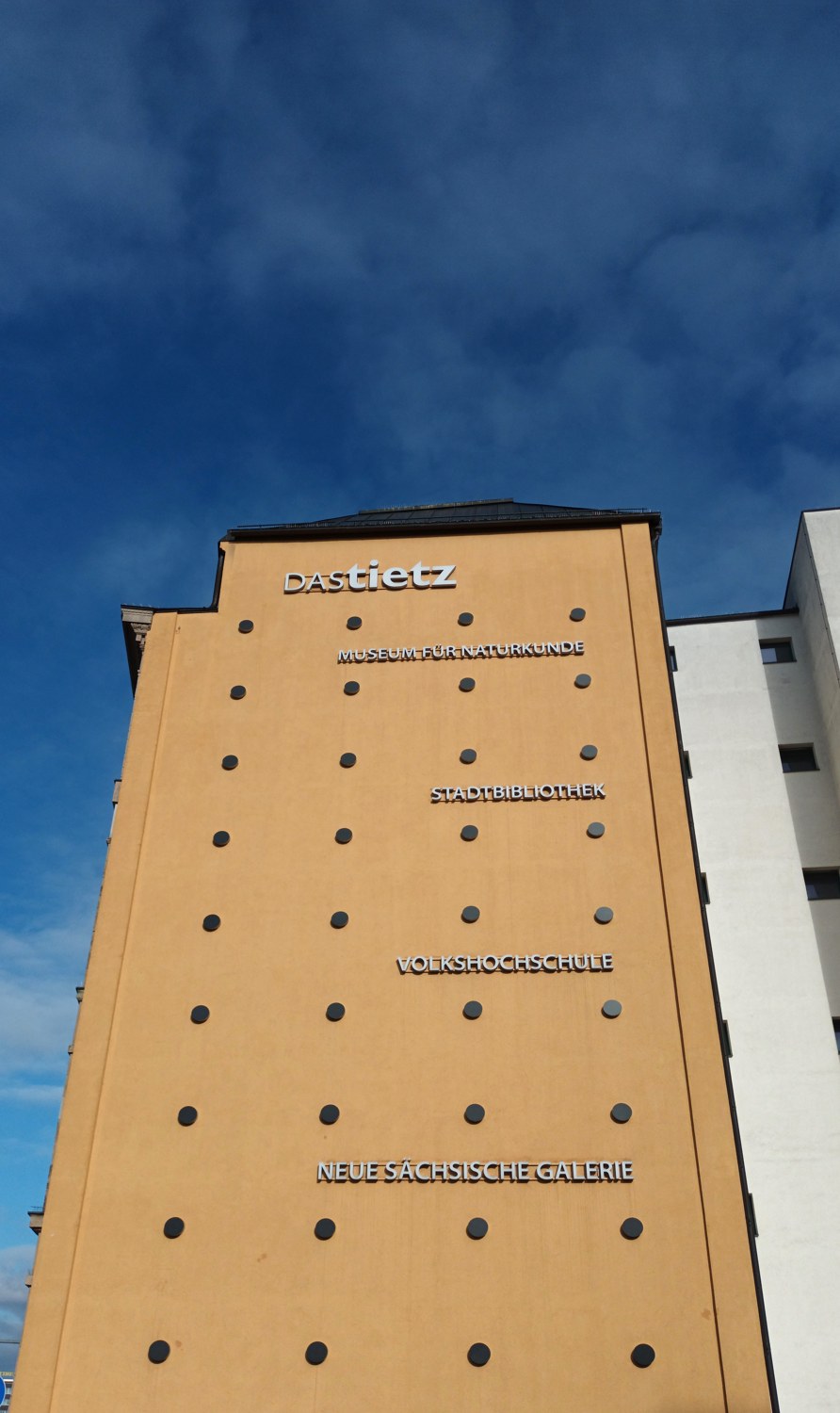
TIETZ contains several cultural institutions. This creates opportunities to combine visits, but does not mean that one admission automatically covers another organisation. Check each institution's opening arrangements separately. An art-lending service or a workshop is also a distinct activity, not necessarily part of an ordinary gallery visit.
With children, choosing a small group of works can be more rewarding than attempting every room with equal intensity. Let each person select one piece and describe something they noticed. The same exercise works for adults without asking anyone to perform the role of art expert. Afterwards, leave time to look independently again or to finish the visit elsewhere in the building. A concentrated encounter is easier to remember than a hurried inventory of artworks.