Choose a precise destination
Ebersdorf suits an outing focused on a particular historic place. The collegiate church provides a clear anchor. Rather than travelling to a general district marker, identify the actual approach to the church and a suitable arrival point. This allows the visit to begin with the buildings instead of a lengthy search through neighbouring streets.
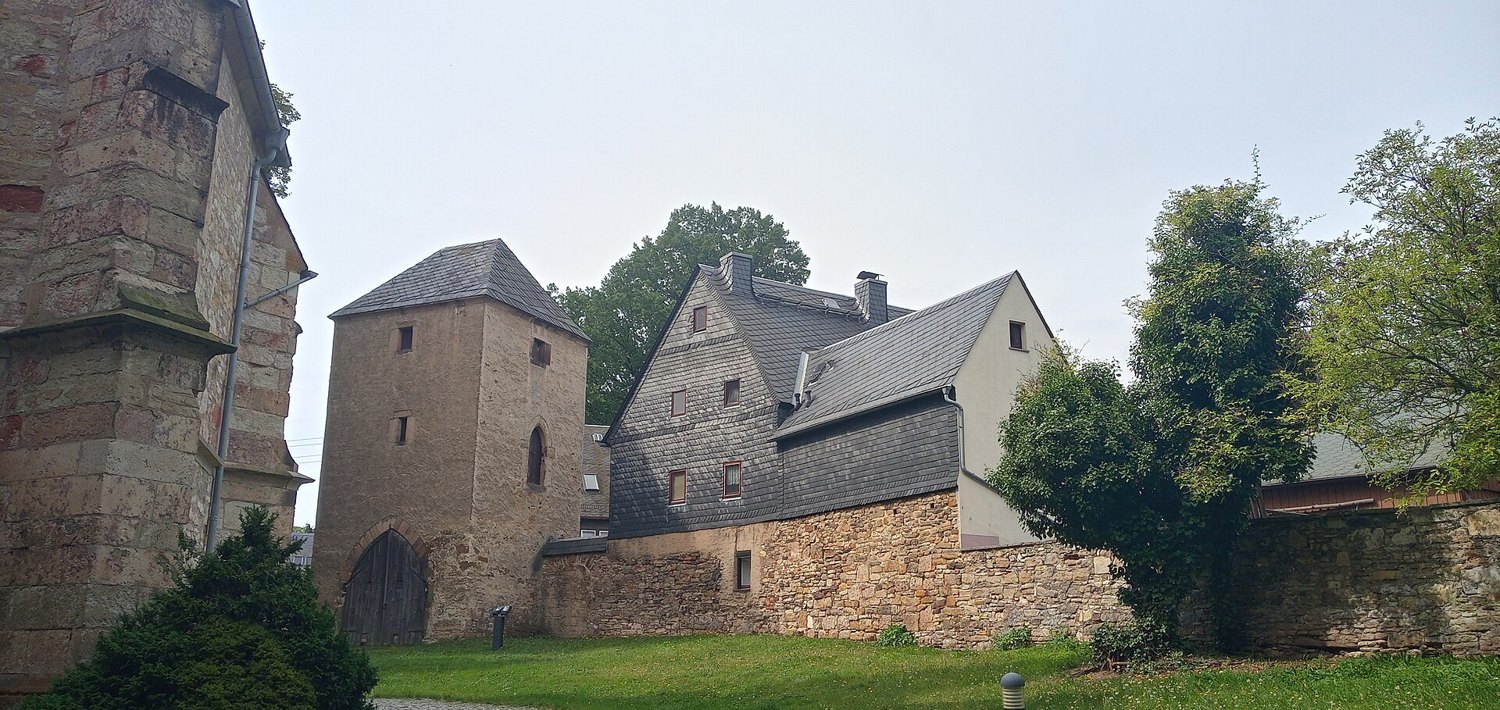
The parish describes a significant late-Gothic ensemble with surviving elements of fortification. Towers and a separate chapel belong to the setting alongside the church. The first useful view is therefore of the group, not just a detail beside a doorway. Ask how the parts are arranged and what sort of space they enclose.
Begin outside, even when the church is open
A slow exterior look makes the interior easier to understand later. Notice the lines of walls, separate volumes and the position of the chapel. Use routes that are actually accessible. An apparent connection beside a wall is not necessarily a visitor path, and church grounds are not somewhere to search for concealed entrances.
Try recording an overall view before two or three details. A simple sketch of the main shapes can be as useful as a photograph. Once the arrangement is clear, unusual windows or entrances become easier to place. You do not need the correct architectural term for every feature before beginning to look.
The complex reflects more than one phase of development. Visible differences can prompt questions, but they do not by themselves prove a date. The parish account supplies historical context. For a deeper visit, use that explanation or ask about a knowledgeable guide instead of inferring an entire building history from changes in the colour of a wall.
Prepare for an interior visit
Check when sightseeing visits are possible and whether advance contact is advised or required. Services and other parish activities can determine access. If a particular object is the reason for your journey, ask about it specifically. An open church does not necessarily mean that every area or item can be approached without restriction.
Start quietly inside. Take in the room as a whole before moving between details. Give priority to people praying or attending an event. Follow the local rules for photographs, and do not use flash or a tripod without explicit permission. A meaningful memory of a building does not depend on collecting the largest possible number of pictures.
Children may find a comparison of shapes more accessible than a long historical explanation. Compare the chapel's outline outside with the space experienced inside the church, for example. Keep the task brief and quiet. An energetic search around other visitors or beyond barriers would not fit the purpose of the place.
Look at the settlement around it
After the ensemble, a limited walk along adjoining public streets can help establish its setting. You begin to see how a historic religious focus sits within a present-day neighbourhood. The church then feels less like a detached museum object and more like a building with an ongoing relationship to its surroundings.
Avoid overloading this extension with distant destinations. If the church visit has been substantial, a few street views and a pause may be enough. A later museum visit in Hilbersdorf should become a separate stage, with its own journey and opening check. Two destinations in the northeast do not automatically make a short combined walking circuit.
Leave some flexibility for departure
Save the return route or intended stop while you still have your bearings. For a timed visit, avoid relying on the last possible connection. A conversation or a closer look at something may take longer than expected.
Ebersdorf works especially well for visitors willing to give one architectural group sustained attention. Someone wanting only a quick exterior photograph needs a different amount of time. Both approaches are valid, provided the plan matches the purpose. The benefit of staying longer lies in understanding the links between architecture, use and settlement, rather than increasing the number of other attractions reached before the day ends.