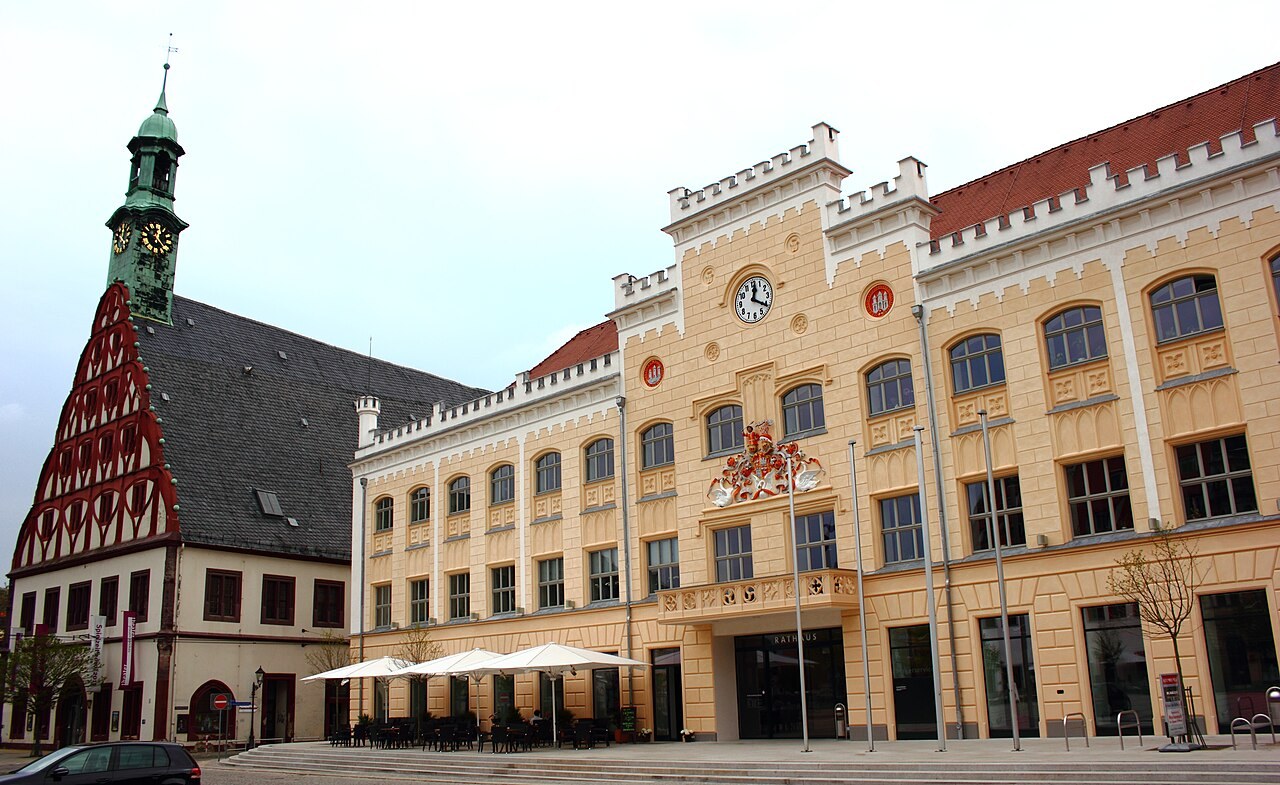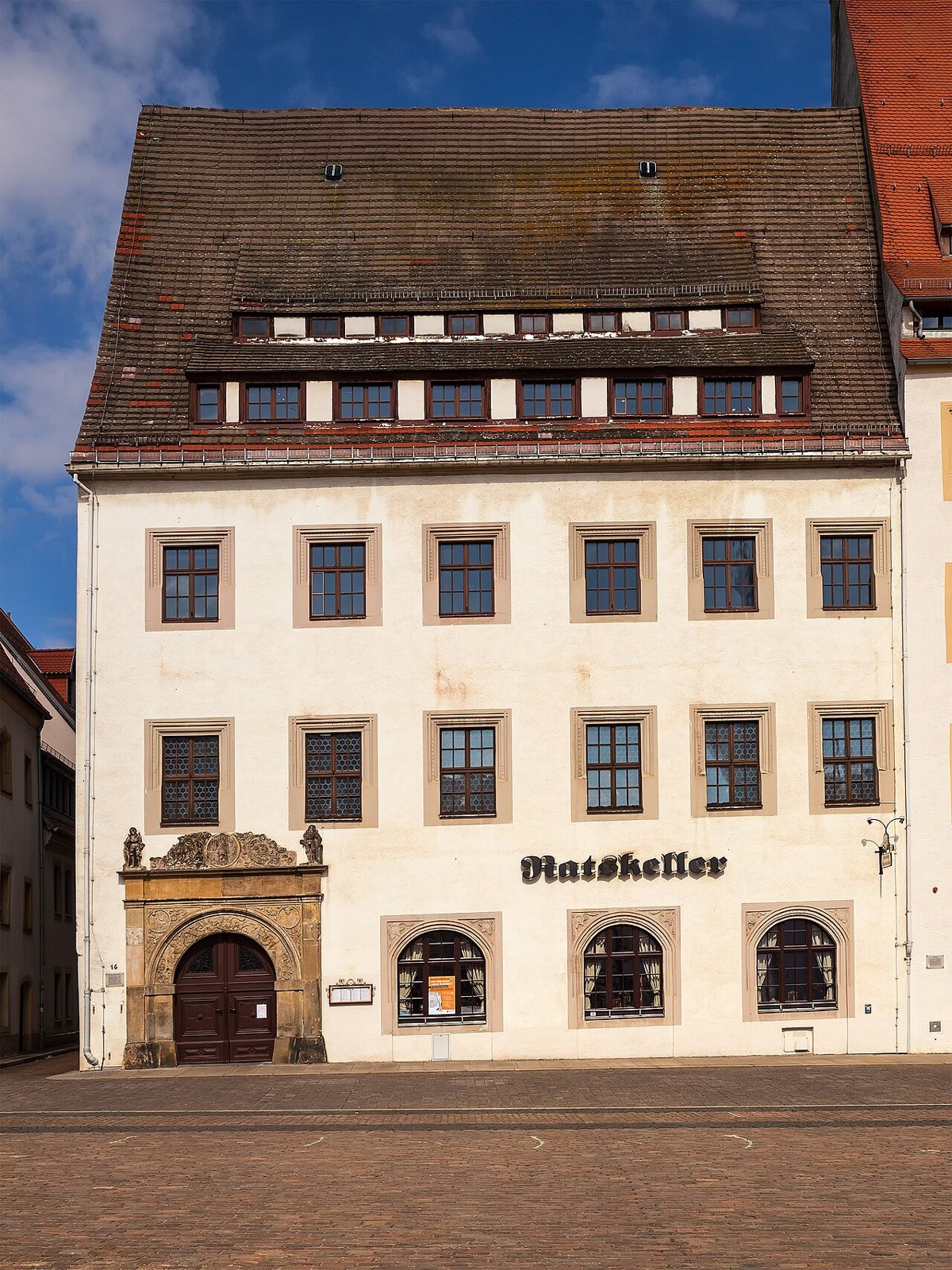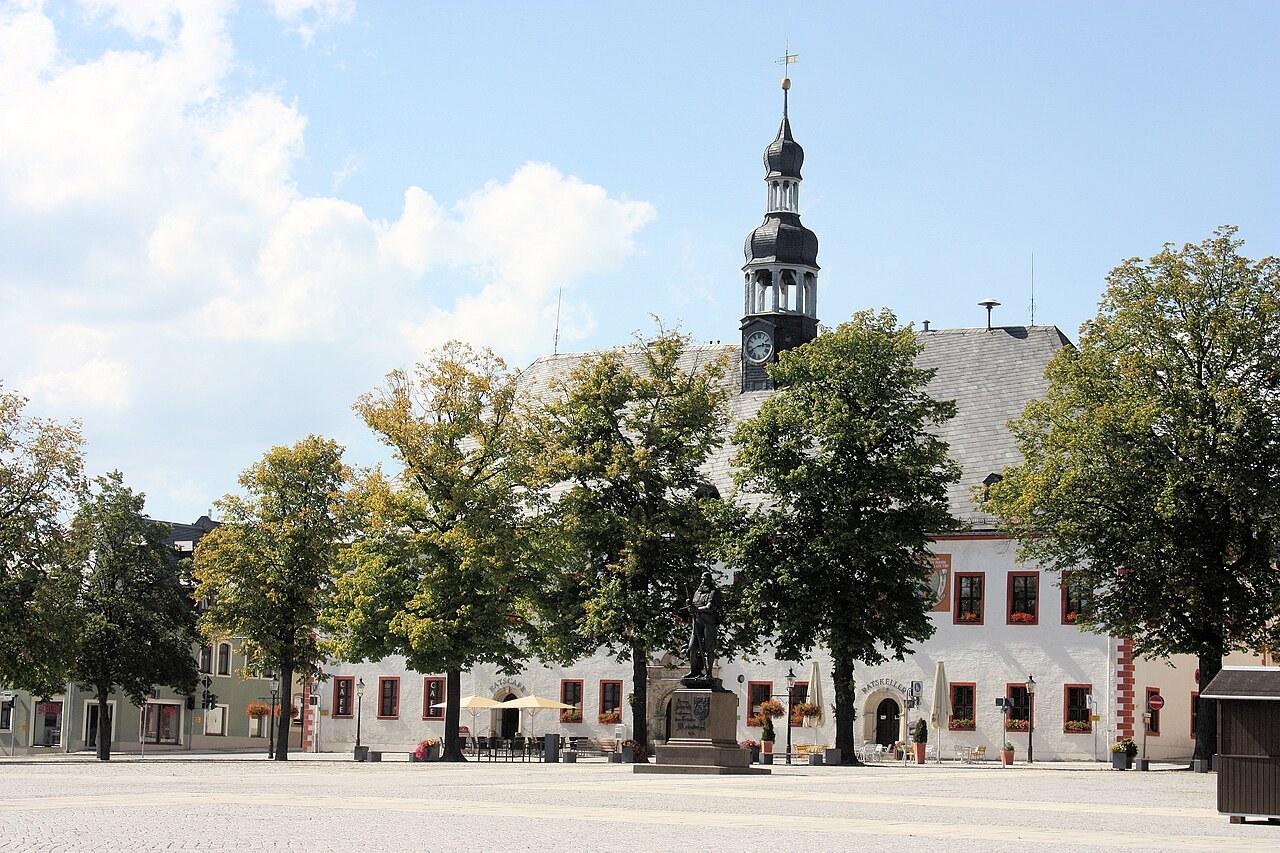
The plan of the town belongs to the visit
Marienberg is interesting not only for individual buildings but also for the arrangement of urban space. Official tourism material describes its historic centre as a planned town informed by Italian Renaissance principles. On foot, that suggests looking beyond facades to the relationship between the square, streets and lines of sight.
The market is a useful starting point. Find a position from which several streets opening onto it are visible. Consider how those routes relate to the square. A town plan can support the observation, but should not replace looking around. Order drawn on paper and the space experienced on foot are different things.
Make a short walk with clear comparisons
Choose two or three adjoining streets and return towards the market from different directions. This makes the role of the large square within the surrounding network easier to see. The walk need not cover a long distance. Repeating one spatial question in several places is more useful than constantly searching for a new photographic subject.
Notice the transitions between public buildings, homes and shops. A planned town does not remain frozen in its founding condition. Later uses, alterations and everyday activity change its appearance. A guided visit or local interpretation can help distinguish those layers without treating every visible difference as a mistake in an original scheme.
Consider the church in its setting
St Mary’s Church provides another point of reference. Even an exterior visit can extend the walk when you consider its position in relation to the streets and market. Entering depends on the church’s current arrangements. Check those separately instead of assuming that arrival during daylight means the door will be open for sightseeing.
If a viewpoint or tower climb is offered, treat it as a separate choice and ask about availability and requirements. A higher view may clarify the town plan, but it is not essential to understanding the layout below. Visitors who do not want to climb can use the map and observations from the street to build an equally coherent picture.
Give the Bergmagazin a separate purpose
The Bergmagazin is another place introduced in the city’s visitor material. If adding its museum, check the current exhibition and admission arrangements. Relate the exterior of a substantial functional building to the question of what such structures did in a mining town. The specific historical explanation should come from the exhibition or a reliable source.
Do not automatically put this visit at the end of an already lengthy walk. If history is your main interest, the museum can lead and the market walk can support it. If the layout is the focus, reverse the emphasis. Either works better than forcing two different excursion ideas into a small amount of time.
Photograph the scale, not only the decoration
A photograph of the square is more informative when its scale remains apparent. A close facade detail shows ornament, but not the effect of the whole space. If interested in photography, combine a wider view with a few details. Use appropriate public places for standing and keep traffic routes clear.
You could also make a small sketch: the square as an area, outgoing streets as lines and a couple of distinctive buildings as reference points. Accuracy is not the goal. The exercise shows which relationships you noticed and which you would like to look at again. For children, this may offer an alternative to reading long interpretation panels.
Keep arrival and everyday use in view
Plan the trip from Chemnitz to your chosen starting point. With public transport, use the actual service for the date; with a car, identify suitable parking and the walk from it. Do not treat the centre as an empty sightseeing enclosure. Respect deliveries, private entrances and residents using the same spaces for ordinary activities.
A meal can mark the shift between observing the layout and exploring its history. Check a real option if a particular eating time matters. Afterwards, leave room for a brief return to the market instead of immediately setting out towards another place beyond the town.
Let the town plan distinguish this outing
The particular subject of the day is Marienberg’s arrangement. You do not need to compare it with as many other mining towns as possible. Understanding the order of this walk, and seeing how people use the space today, provides a sufficient focus.
Finishing near the starting point makes the change in your own view noticeable. What initially seemed simply a large square may now read as a connection between streets, buildings and functions. That relationship can fill a day with substance even when further attractions remain for another visit.