Let the setting influence the plan
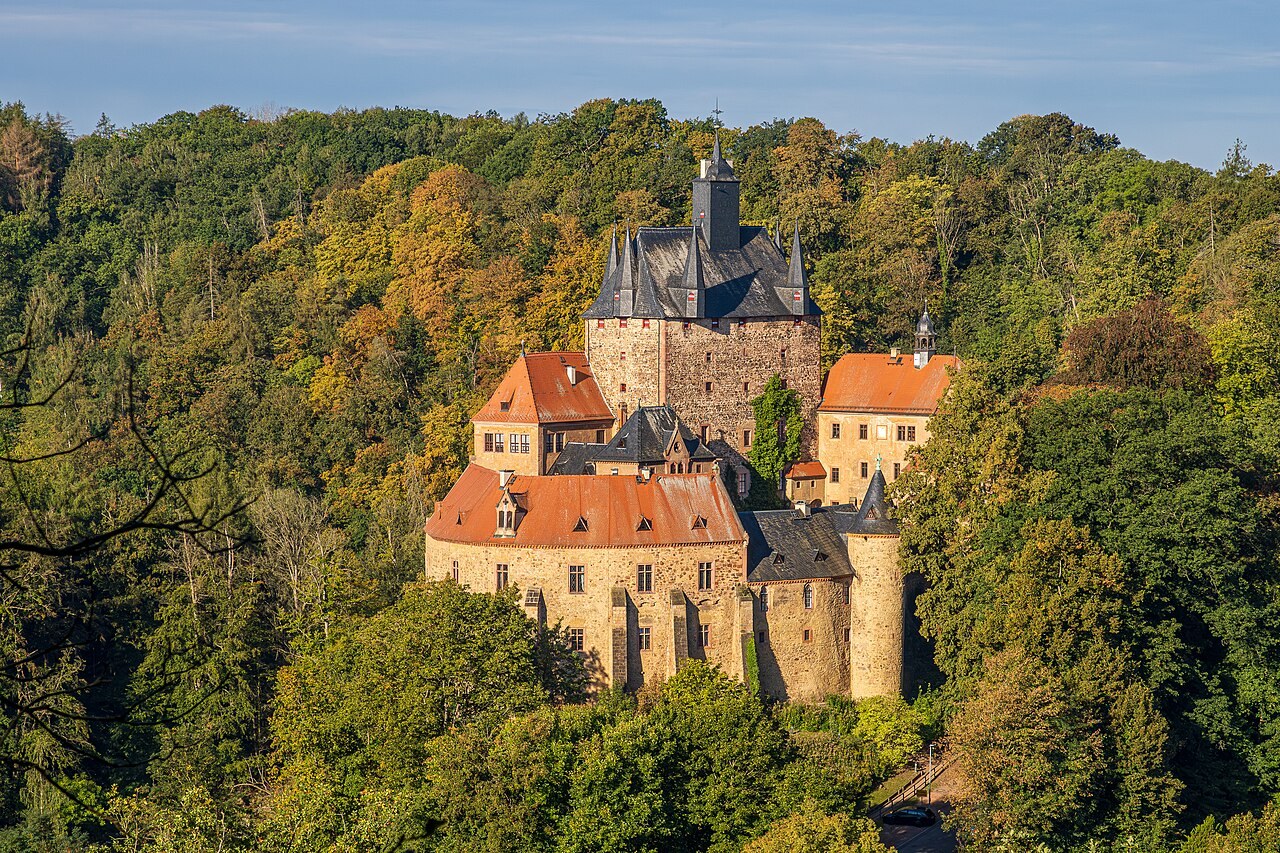
Kriebstein Castle stands prominently on rock above the Zschopau. Its steep-looking outline is more than a photographic feature: it is a reason to examine the approach carefully. From Chemnitz, include the route from the parking place or transport stop to the entrance. Arriving in the locality alone is not enough before a fixed appointment.
The official visitor page provides arrival information and notes about the final stretch. Use it with a current map. If steps, slopes or longer walking affect the visit, ask the castle about a suitable arrangement. The usability of a historic approach cannot be judged confidently from a distant view.
Connect exterior and interior
Begin by looking at the complex as a whole if you have an appropriate public viewpoint. The relationship between rock, river and building helps explain the place. Do not use unsecured banks or closed ground to obtain a particular angle. A familiar photograph is not evidence of a safe route to where it was taken.
For entering, check opening hours, last admission and any tours. A castle is not an entirely unrestricted landscape; individual areas may operate under different conditions. Read what the chosen offer includes before allocating time. A quick exterior stop and a detailed interior visit are two distinct kinds of outing.
Read the rooms as a connected building
Inside, notice how spaces and routes fit together. Doorways, stairs and different levels shape the experience as much as individual furnishings. A guide can explain which parts relate to different uses or building phases. Without that explanation, a visible irregularity should not immediately be turned into a specific historical story.
With children, focus on concrete questions: where does light enter, how do people move between rooms, and which areas appear particularly protected? These observations concern the architecture without converting the place into an invented tale of knights. Always remain within the visitor route and follow the restrictions applying to it.
Do not automatically add the reservoir
The nearby reservoir is a separate outing area. Visiting the castle does not mean a boat trip or substantial waterside walk can follow without further planning. Check the real connections and, where relevant, sailing arrangements. If the castle is the main interest, a break afterwards may already provide the right ending.
For departure, include the journey to the stop or car before selecting the last possible admission or tour. A tight connection is especially unhelpful in poor weather. A day that gives architecture and setting enough attention does not need another major attraction in order to work as an outing.