Rocks, a walk or a performance?
The Greifensteine are an Ore Mountains destination with conspicuous granite formations. From Chemnitz, distinguish a short visit to the area, a longer walk and a performance at the open-air theatre. They may be combined, but require different timing and preparation. A theatre ticket shapes the day differently from an independent stroll.
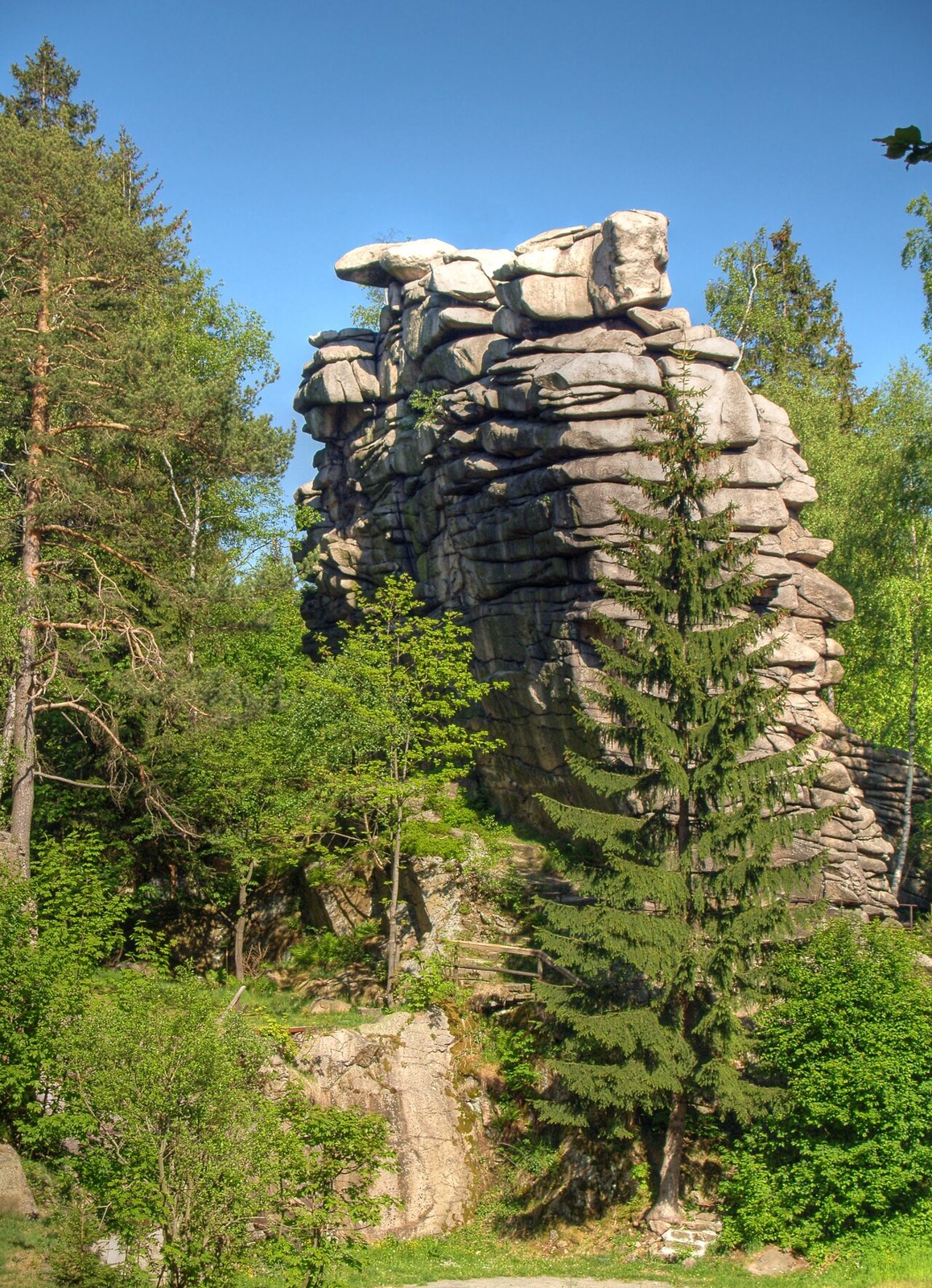
Use the official Greifenstein region information to choose a specific route or activity. A landscape name on a map is not a complete walking description. Check start, course, length, return and current local notices. The photograph shows the rocks; it does not establish that any particular climbing or ascent route is suitable for every visitor.
Look from the designated routes
The relationship between individual rock formations can be observed from areas intended for visitors. Change viewpoint only where a suitable route exists. A striking composition is not a reason to cross barriers or enter unsecured ground. With children, make the distinction clear: an appealing photographic subject is not automatically an invitation to climb.
Pay attention to surfaces and weather. Rain, fallen leaves and winter conditions can change a path. If using a viewpoint, check its present access and whether it suits the group. A shorter circuit can be just as valid as an ascent when it matches the day and the people taking part.
Plan the theatre separately
Naturtheater Greifensteine uses the rocky landscape as the setting for performances. The operator describes a long theatre tradition at the site, but the current programme determines your visit. Date, start, duration and ticket conditions must fit arrival. A summer photograph of the stage does not imply a performance on any chosen day.
For an outdoor production, clothing and weather planning belong to the experience. Read the organiser’s actual arrangements for adverse conditions rather than making assumptions about whether a show proceeds or a ticket is refunded. Include the journey after the performance too. Departure may take place at a different time of day from a normal afternoon outing.
Do not extend the walk without checking it
If you want to continue after a short visit to the rocks, inspect the route before setting off. A sign towards a distant destination does not always show the full time needed to go there and return. Account for the slowest walker, breaks and remaining daylight. A chosen circuit is easier to manage than a sequence of spontaneous turns.
Carry what the actual route requires and do not rely on somewhere to eat always being open. Check a specific food stop if it forms part of the plan. A visitor landscape is not a continuously staffed facility, and different parts may have different services and access.
Leave with one clear version of the day
The outing can consist of a suitable circuit and a pause, or it can be organised entirely around a performance. There is no need to combine every type of visit. Choosing a focus gives more time to notice the rock landscape and begin the return without rushing. Other paths or a different production can provide a reason to come back later.