Add the onward address to your rail journey
A ticket or journey search for Chemnitz Hbf settles only the first part of arriving. Save the full address of your accommodation or meeting place as well. A hotel name on its own can be ambiguous when properties have similar names. Look at a map to see which side of the centre you need and whether a short onward journey by public transport would help.
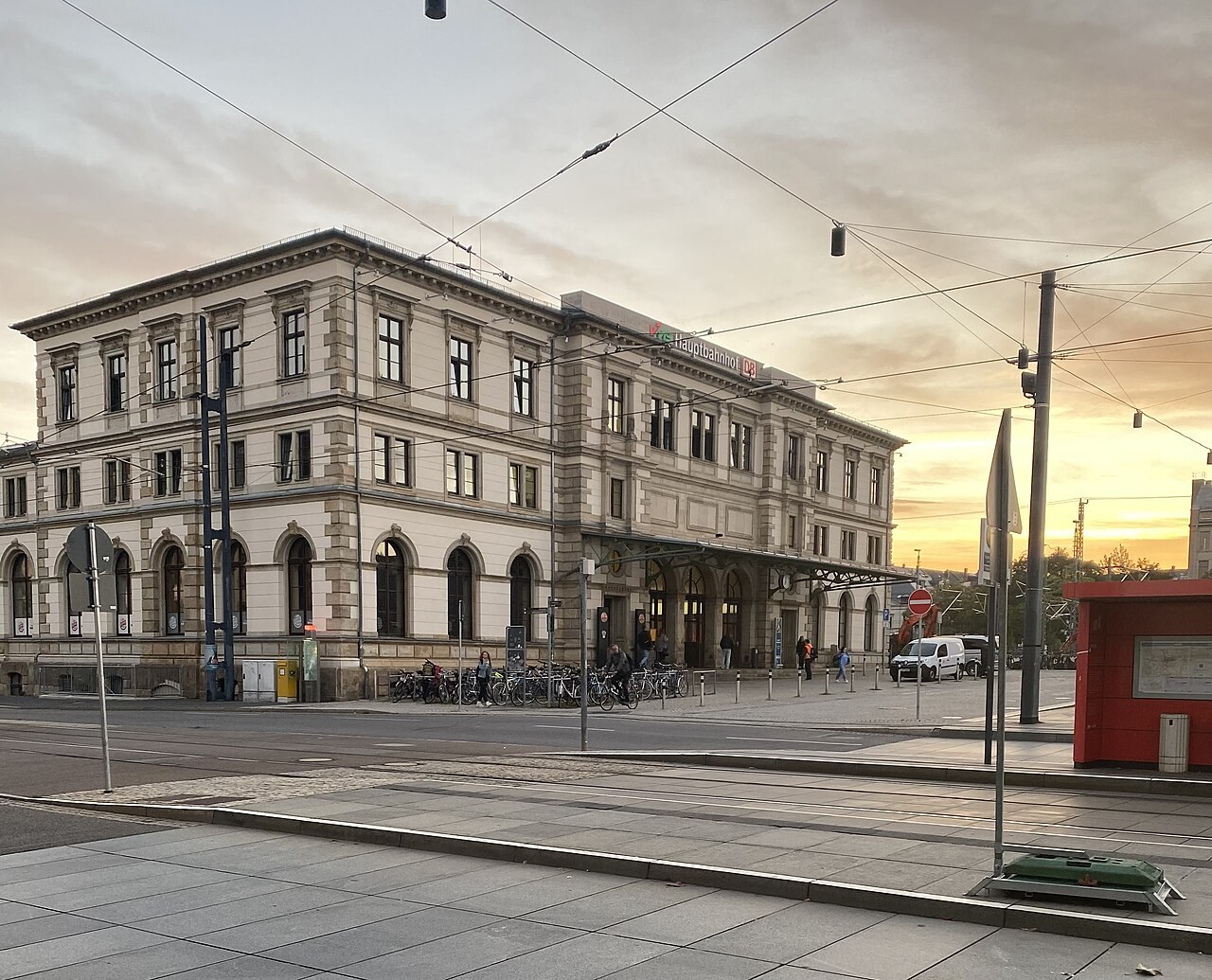
The official DB InfraGO station page brings together information about Chemnitz Hbf. Use it for the station plan, facilities and current notices rather than inferring present arrangements from an older photograph. A station image can show architecture and atmosphere; it cannot confirm that a lift is working or a particular service is available on your travel date.
Pause before choosing an exit
After leaving the train, do not automatically follow the largest group of passengers. Look first for signs towards your next destination: an exit, a connecting platform or local transport. If several people are travelling together, agree where to regroup before anyone goes to buy food or sort out a ticket. Keep that meeting point clear of passageways and other passengers’ routes.
Changing trains is a different task from heading into town. For a connection, read the complete destination as well as the departure time. For a city visit, having the name of your destination stop saved makes it easier to compare a display with your plan. It avoids searching for the accommodation address while also trying to decide which vehicle to board.
Read the details of the onward connection
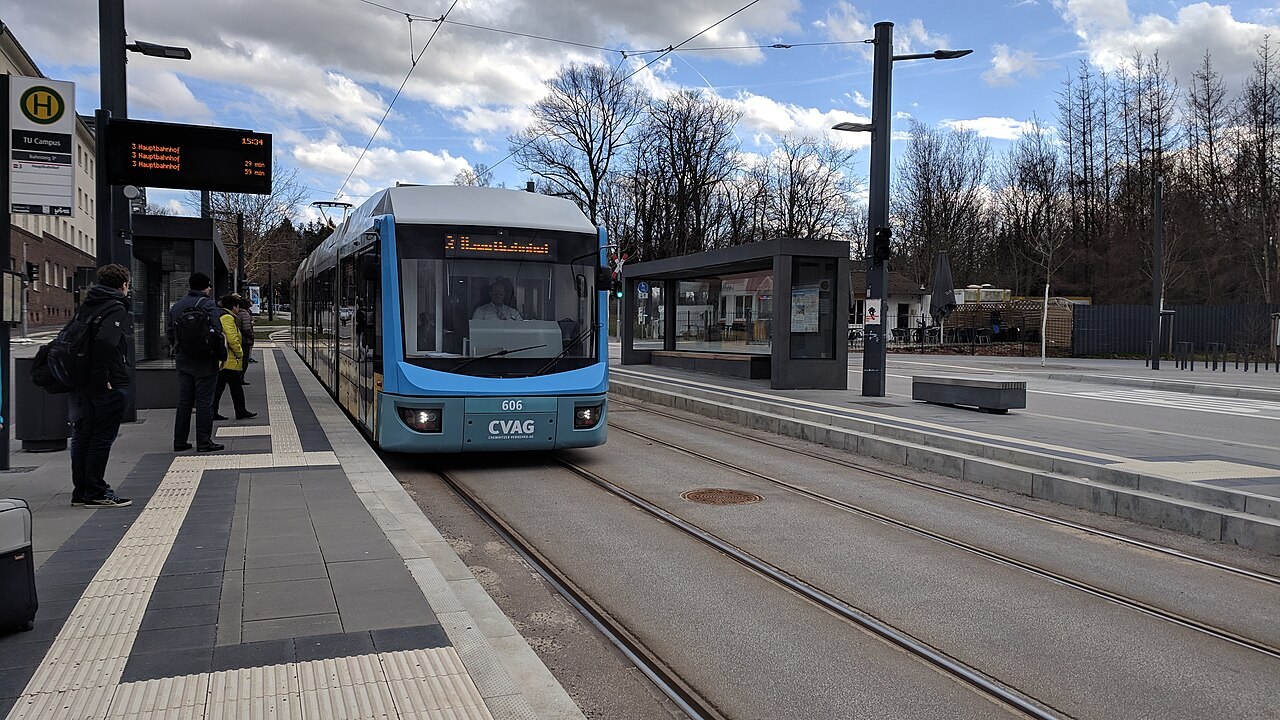
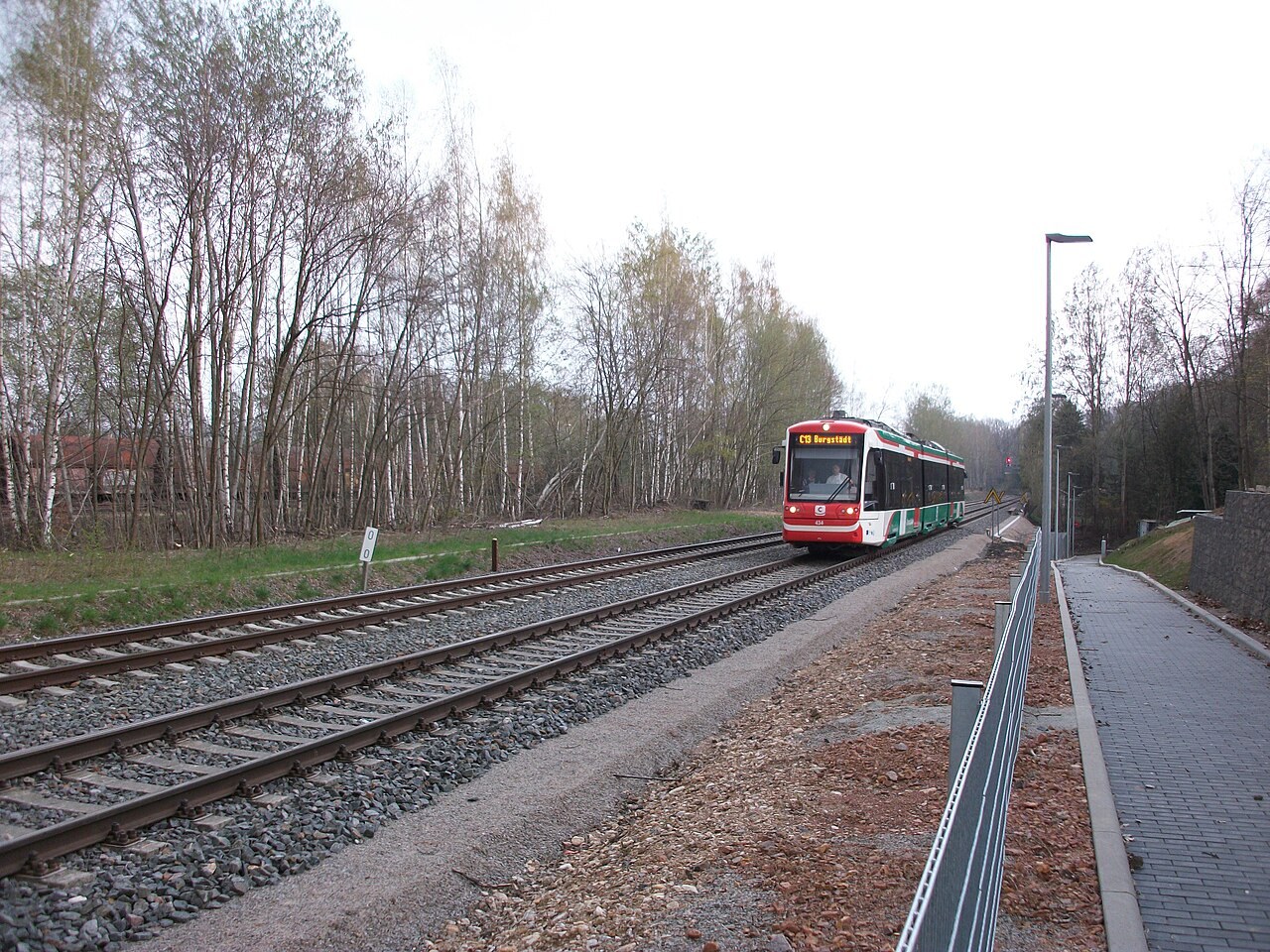
Several transport services meet at Chemnitz Hauptbahnhof. CVAG and VMS journey information is useful for the next stage within the city. Enter the actual date and a realistic departure time after your train is due. A connection at the precise minute of arrival does not allow any time to move through the station.
Pay attention to the named departure point. Similar stop names can refer to different positions, so the detailed journey view matters more than a line number alone. Engineering work or replacement buses may alter even a short connection. Use current operator notices and signs on the day when these differ from an older saved plan.
Let your luggage influence the route
A walk towards the centre may be appealing with a light backpack and much less comfortable with several heavy cases. Compare not only distance and journey time but also the number of changes and the walk after leaving the vehicle. A slightly longer journey without another transfer may suit your group better than the shortest result in a planner.
If you need storage, check current station information or ask the accommodation. Do not build the afternoon around an available locker before checking size, access arrangements and availability. Pack immediate essentials and travel documents where you can reach them without opening the whole case on a platform. This makes the first few decisions after arrival easier.
Arrange assistance around the whole journey
If you need step-free access or help boarding and leaving trains, consider every link. The usable platform exit, the specific onward service and the accommodation entrance all need to work for you. A general accessibility label is not a substitute for discussing individual requirements. Use official assistance channels and keep any booking or confirmation details readily available.
For a pick-up, agree on a precise meeting point that both sides understand. “At the station” is too vague when more than one entrance could be meant. Choose a place identifiable on the station plan and decide how to contact each other if the train is delayed. A short message after getting off is often more useful than repeated guesses during the final minutes of the journey.
Save the return journey separately
Do not assume that departure will simply reverse arrival. A different time of day or a revised timetable can change the useful connection. Allow for collecting bags and reaching the correct platform. With those details settled, the main station becomes a manageable transition between rail travel and the city, rather than a rushed final obstacle.