A stream within everyday surroundings
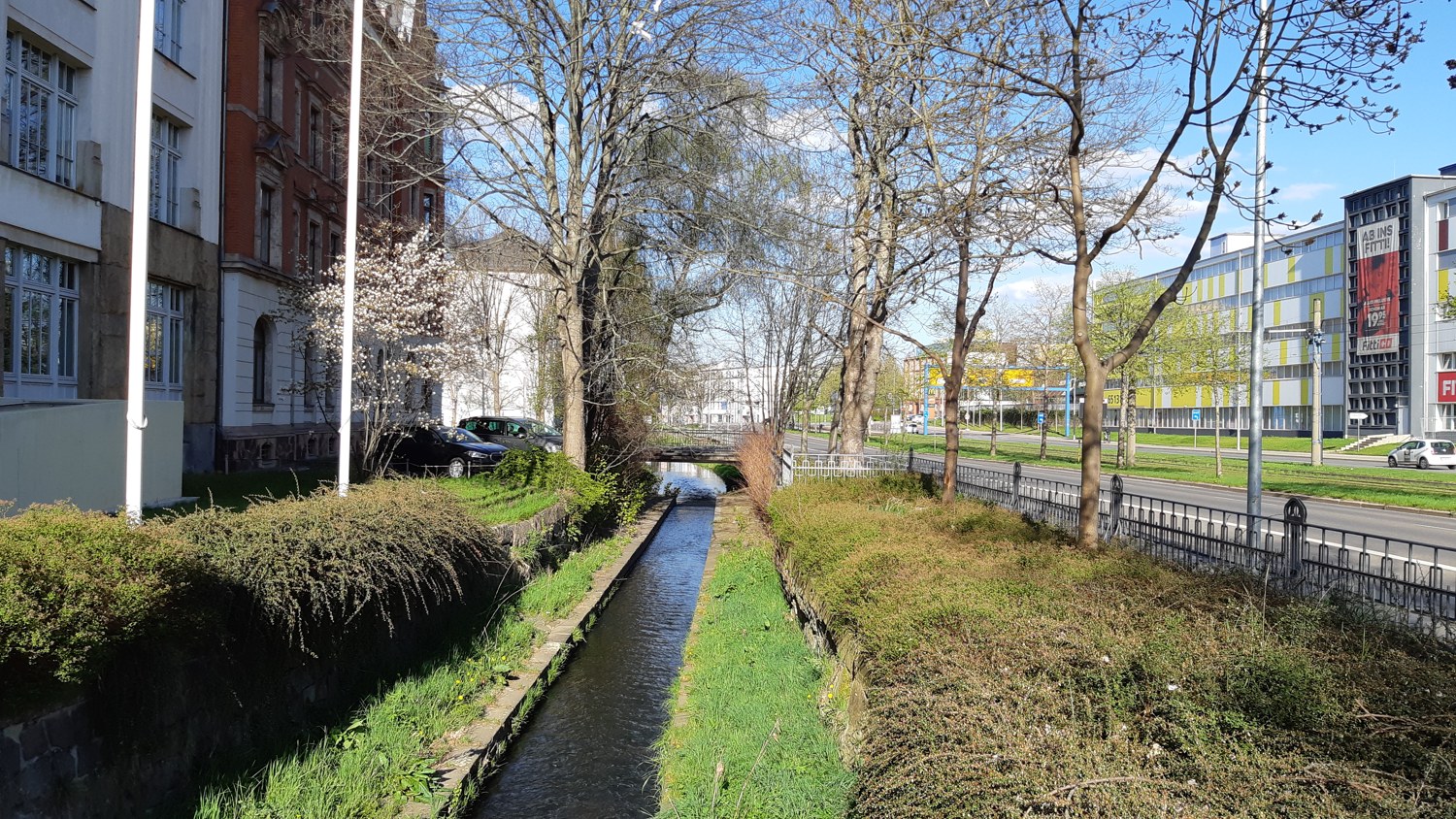
Kappelbach offers a different scale from a large city square. Along suitable public sections, water comes close to paths and buildings; elsewhere it slips out of immediate view. That changing relationship is what makes a walk interesting. It shows how a small stream is accommodated within the working city.
Choose a real path section on the map beforehand. The tourism route for a cycle outing through green Chemnitz includes a cycle path beside Kappelbach. This does not establish continuous walking access along both banks for the stream's entire length. Check the specific connection between entry and exit, including any road crossings.
Look beyond the water
The edges are often the revealing part: a bridge, a wall, a slope or a building facing away from the stream. Such details show different ways in which water is treated in an urban setting. Compare two sections rather than aiming for maximum distance. Where does the channel feel open and where enclosed? Where is there room to pause, and where does the path mainly carry people through?
Keep some surroundings in photographs. A close-up of water alone could belong almost anywhere. Adding a recognisable path, bridge or adjoining street turns the image into an observation about this location. Leave shared routes clear while stopping and remain on publicly accessible ground.
Make it a connection, not an obligation
The corridor can form part of an everyday journey or a short additional outing. It does not need to become a major hike. When coming from another visit, choose a manageable section with a clear endpoint so that the walk remains an addition rather than an unplanned extension.
After rain, banks and unpaved ground can differ from an older photograph. Closures and current notices apply regardless of what a saved map shows. Do not climb down to the water to replace a missing path connection. The interest of Kappelbach lies in attentive looking within Chemnitz, not in attempting to follow every bend of the stream.