Begin with contrasts around the market
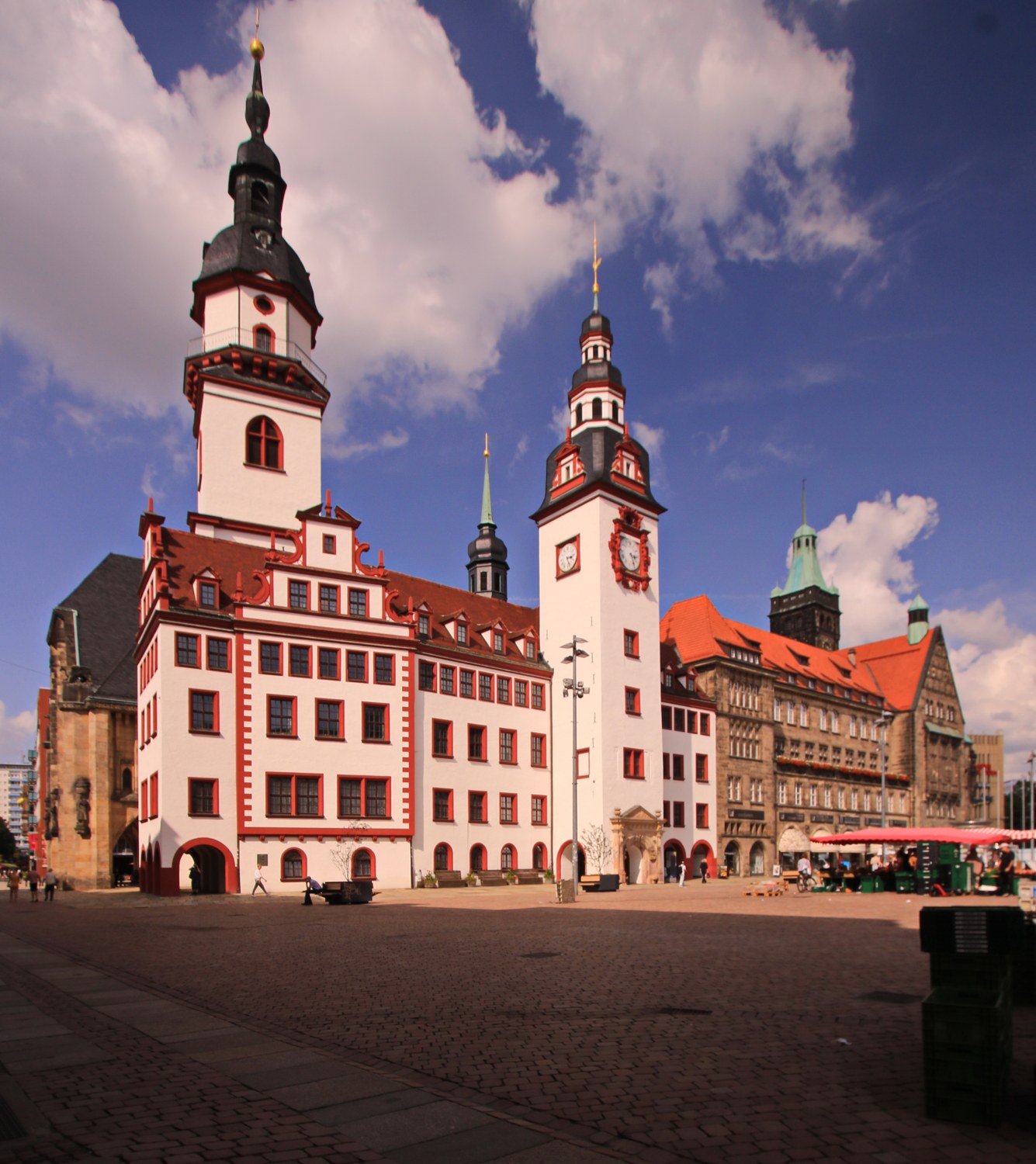
Markt and Neumarkt provide a useful starting point for an architecture walk. The official overview highlights the coexistence of Siegert'sches Haus, the town halls and modern glass architecture here. Rather than collecting dates immediately, look at how the buildings meet the square. What seems solid and what transparent? Where is an entrance emphasised, and which façade reads as a quieter surface?
These questions do not require specialist knowledge. Photograph the setting before isolating a detail. One ornamental fragment explains little about how a building works in the city. A wider view shows different periods shaping the same present-day space. Architectural history is not arranged here in neatly separated textbook chapters.
Use Roter Turm to change the scale
Roter Turm offers another reference. Its shape and former purpose differ from the buildings of today's shopping and administrative centre. Consider how an older structure sits within a subsequently altered setting. The question is not only how old the tower is but how it is encountered among present routes and buildings.
Entry inside is not automatically part of the walk. For an architectural comparison, the exterior is a valid beginning. If adding a guided visit, check that separate opportunity and arrange the route around it. The outing then still works when an interior is unavailable or a tour does not fit the time.
Continue towards the former Schocken store
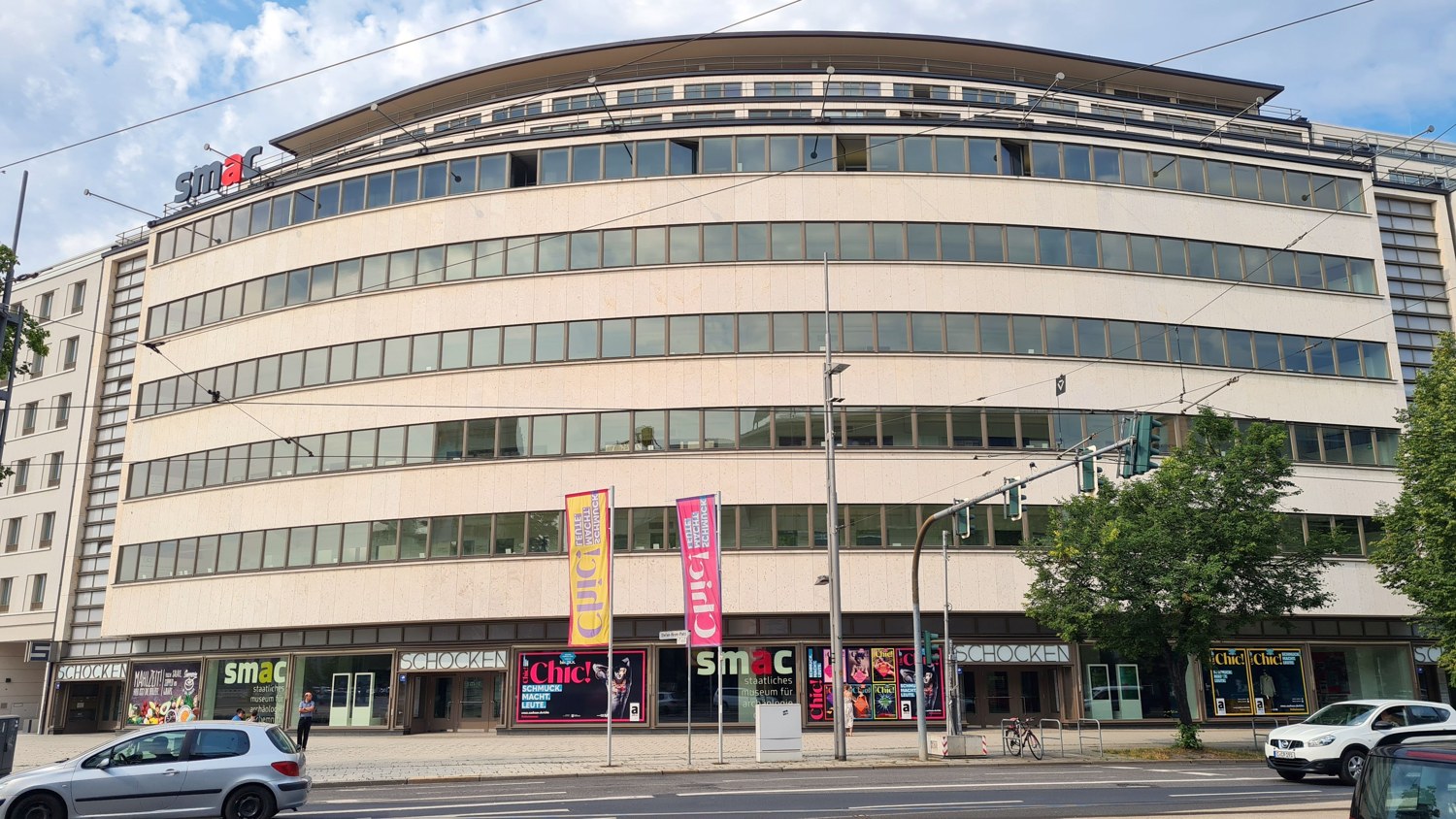
The former Schocken department store, now housing smac, introduces a different architectural language. Its curved façade already provides an outdoor comparison with the more divided elevations of older houses. Notice horizontal lines and the transition around the corner. At this stage the subject is the department store as a building type, not the entire archaeology exhibition inside.
Going in should be a deliberate addition. The history of the building and the archaeological displays can substantially extend the stop. Check current visitor arrangements. A short architecture walk and a detailed museum visit are both worthwhile but occupy different amounts of time. Combining them unquestioningly within the same small interval usually produces a hurried experience.
Look at Theaterplatz as an ensemble
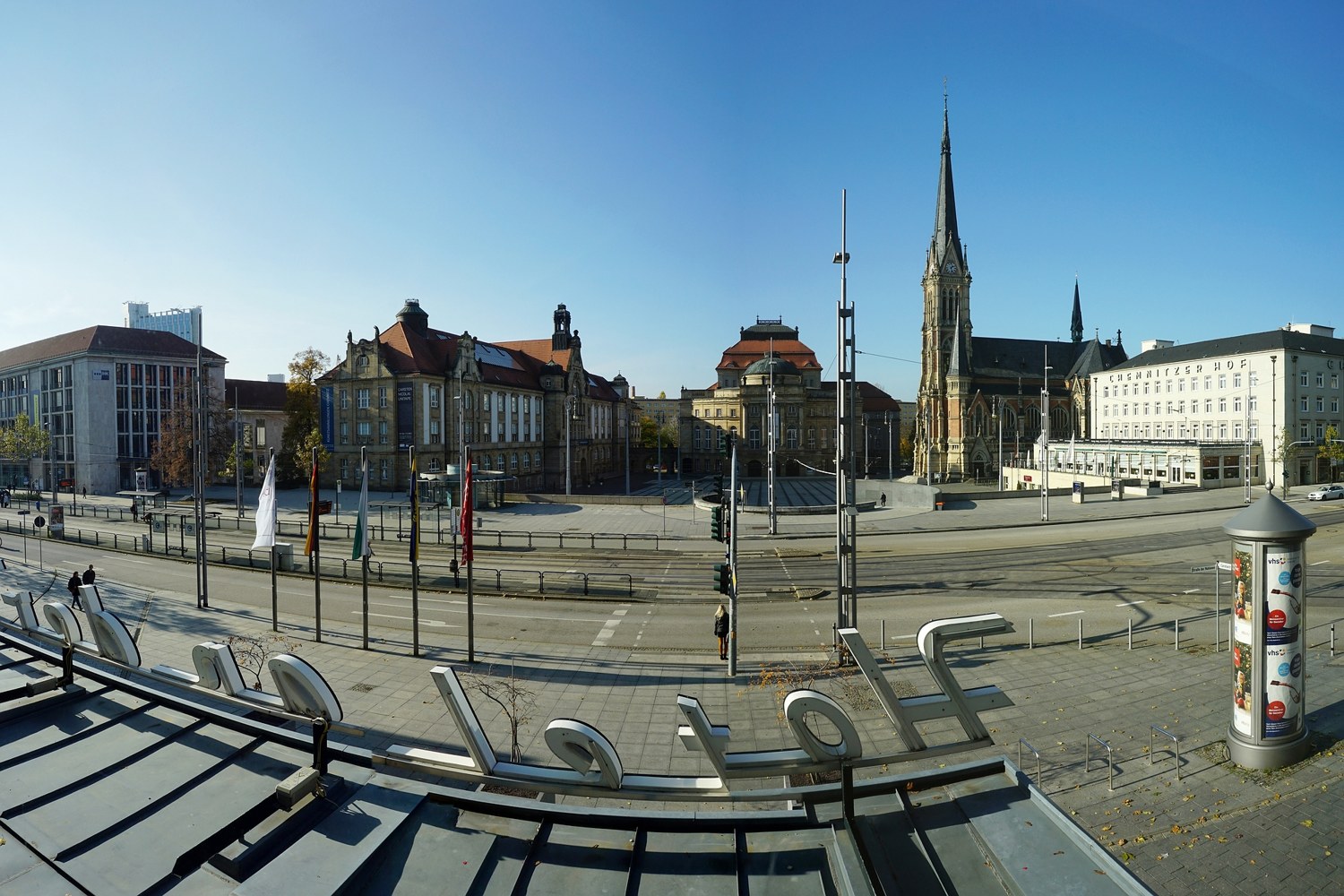
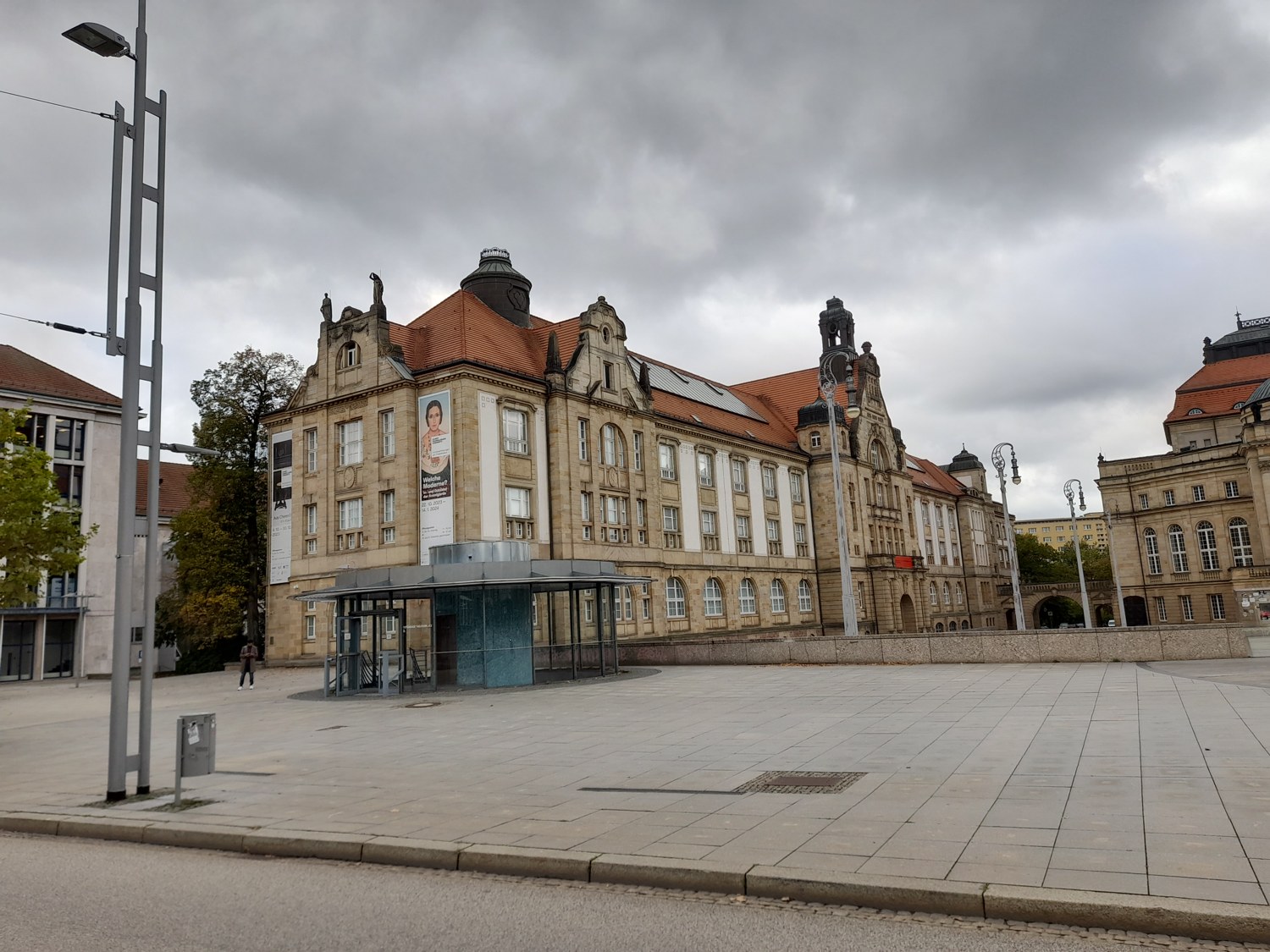
At Theaterplatz, the relationship between buildings matters more than any single façade. The opera house, art collections and Petrikirche give the square different edges. Move along public routes and compare which building first attracts attention from each position. An ensemble changes with the location of the observer.
The role of open ground also becomes apparent. Architecture includes distance and lines of sight as well as walls. A closely framed photograph may make one building impressive while losing its surroundings. Add another view in which the square itself remains visible.
Choose Kaßberg as an alternative or extension
If time and energy remain, a selected part of Kaßberg can continue the walk. The emphasis shifts to residential buildings and the rhythm of longer streets. Barbarossastraße offers a recognised starting area. Compare ground floors, entrances and neighbouring heights as well as decorative features.
For a shorter outing, Kaßberg is an alternative to a substantial interior visit rather than a compulsory extra. The journey there belongs in the plan. If the group is already tired, do not attach an entire district merely to claim completeness. A second walk with a narrower question may be more rewarding than the exhausted end of an overlong itinerary.
Separate observation from explanation
It is reasonable to find something unusual, austere or playful. That impression should not become a confident historical attribution. Record the street and house number for later research. Public information and building histories can add to your observations without replacing them.
Keep entrances and pavements clear while looking. Residential buildings remain private even when their façades are widely known. Three comparisons are enough to retain: a building's relationship to a square, a tower within a modern setting and a residential street beside a civic ensemble. The walk becomes a sequence of understandable questions rather than a collection of architectural names.